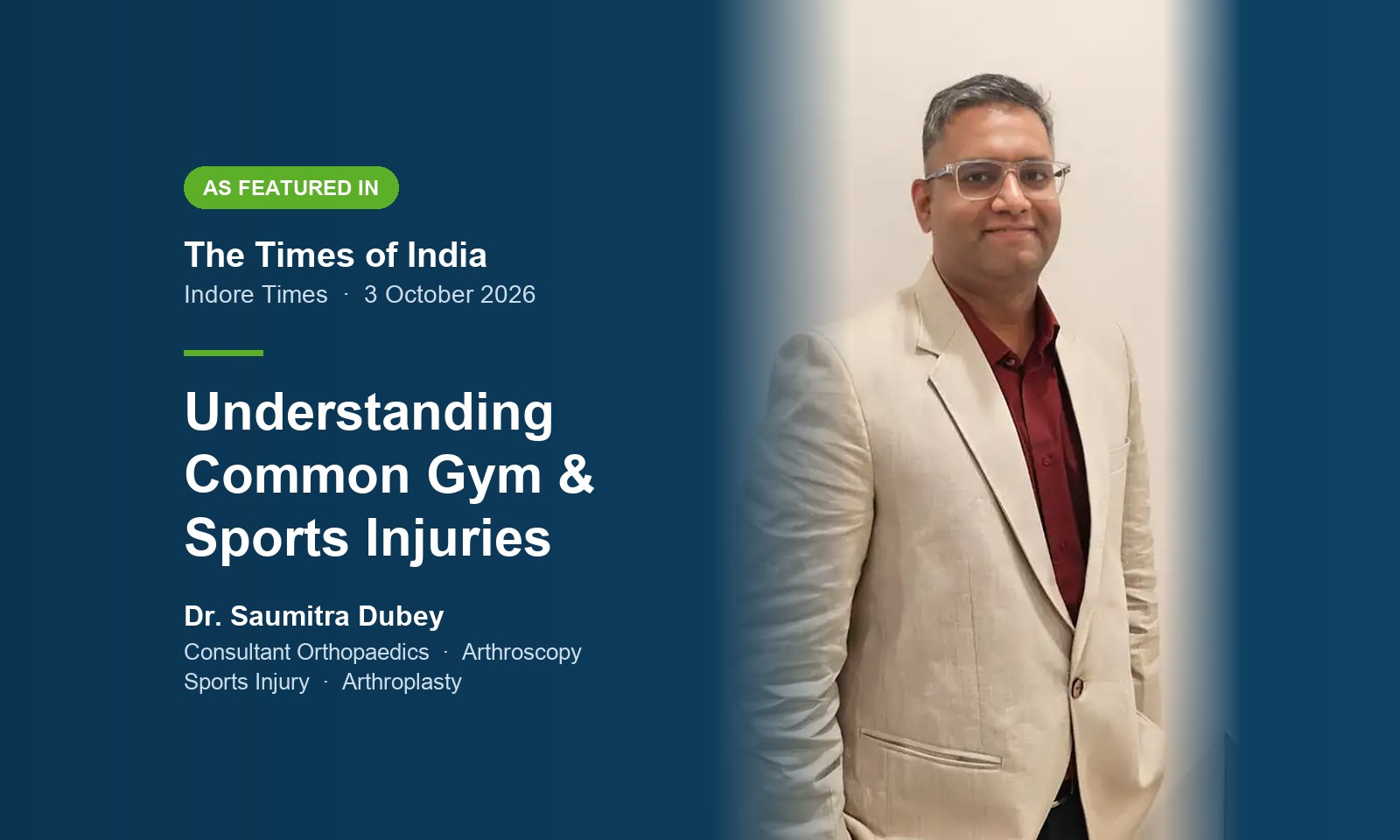
This article is based on Dr. Saumitra Dubey’s expert feature “Understanding common gym & sports injuries”, published in Indore Times, The Times of India, on 3 October 2026.
Gyms, recreational sports and fitness classes are now part of everyday life for many people in Indore. Staying active is one of the best things you can do for your health, but training too hard, using poor technique or going back to exercise before an injury has healed can turn a healthy habit into a painful one. Knowing how these injuries happen helps you train safely and get the right care at the right time.
Where common gym and sports injuries start
Shoulder
The shoulder moves through a very wide range, which also makes it easy to strain. Bench presses, overhead lifts, cricket and volleyball can lead to rotator cuff problems, shoulder impingement and labral injuries, especially when form slips or training load rises too quickly. Shoulder pain that keeps coming back during workouts is not just ordinary muscle soreness and should be checked.
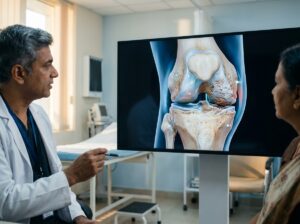
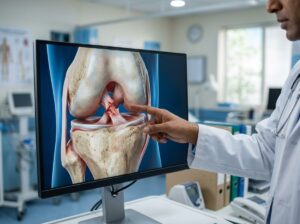
Knee
Squats, lunges, Zumba and football place heavy demands on the knee. Meniscus tears, ligament injuries and pain around the kneecap (patellofemoral pain) are common when technique is poor, stress is excessive or recovery is too short.
Back and spine
Weight training can cause lower back muscle strains, disc bulges or herniation and trapezius muscle problems if exercises are done incorrectly. Deadlifts and lat pull-downs in particular need correct form and controlled movement.
Elbow and wrist
Repetitive movements in tennis or poorly performed lifts can cause tennis elbow, golfer’s elbow, wrist sprains and other overuse injuries.
Foot and ankle
Ankle sprains, plantar fasciitis and retrocalcaneal bursitis are linked to twisting movements, unsuitable footwear, faulty landing and incomplete rehabilitation after an earlier injury.
Warning signs you should not ignore
Some muscle soreness after a new or hard workout is normal. But see an orthopaedic specialist if you notice:
- Pain that persists, keeps returning or limits normal movement
- Swelling around a joint
- A feeling that the joint is unstable or giving way
- Loss of strength
- Restricted movement
These symptoms can point to an underlying injury that needs proper assessment, so do not push through them.
Tips to prevent gym and sports injuries
- Warm up for 5–10 minutes before exercise
- Learn correct technique before adding weight
- Increase your training load gradually
- Wear proper footwear and practise safe landing technique
- Cool down with light activity and stretching after training
- Give your body enough time to recover
- Stop if pain persists – do not train through an injury
- Complete your rehabilitation before returning to sport
Train smart, recover properly
Preventing injury does not mean avoiding challenging workouts. It means preparing your body, using the right technique and allowing time to recover. After an injury, structured rehabilitation matters just as much: returning to full activity too soon raises the risk of the injury coming back. As Dr. Dubey puts it, “Recovery is a part of training, not a break from training.”
The aim is to return to activity safely, with strength and movement fully restored. Early evaluation helps find the cause of persistent symptoms and guides the right treatment and rehabilitation, and in suitable cases timely diagnosis can stop a simple injury from becoming a complicated one.
Train smart, stay consistent and listen to your body. Fitness is not only about how hard you can train, but about staying healthy enough to keep moving.
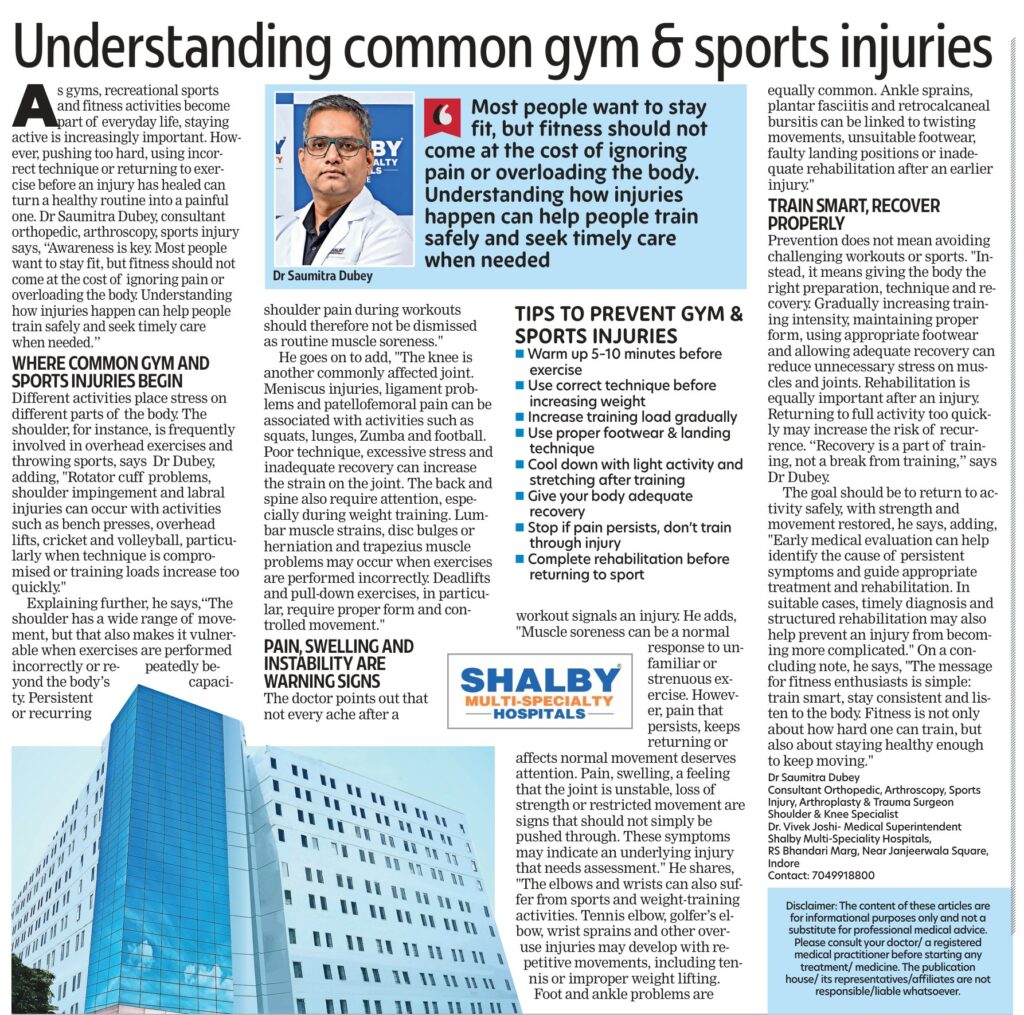
Disclaimer: This article is for general information only and is not a substitute for professional medical advice. Please consult a registered medical practitioner before starting any treatment.