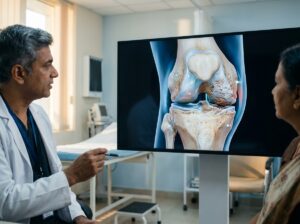
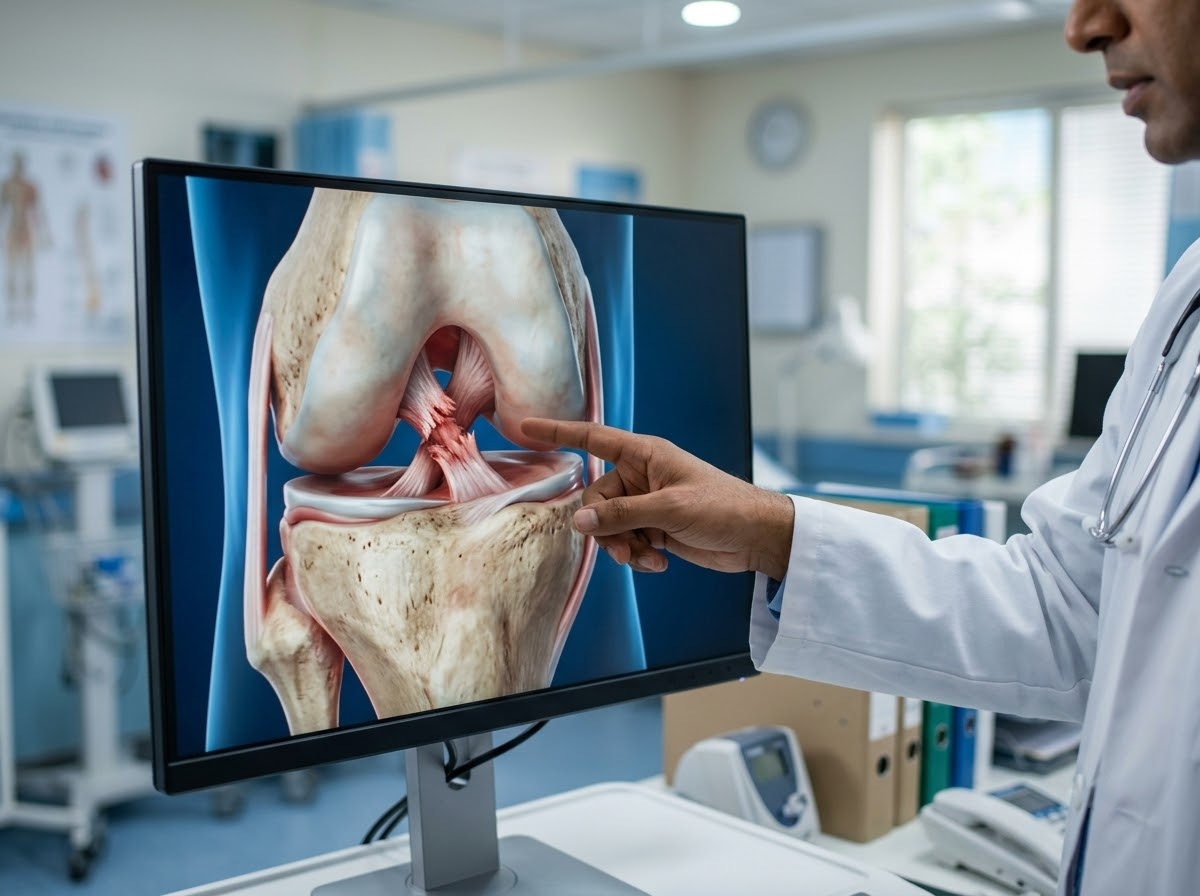
The anterior cruciate ligament (ACL) is one of the main ligaments that keeps the knee stable, especially during twisting, pivoting and jumping. An ACL tear is a common injury in football, cricket, basketball, badminton and other sports, but it can also happen during a simple fall or a sudden change of direction.
Common symptoms of an ACL tear
- A “pop” felt or heard in the knee at the time of injury
- Swelling within a few hours
- Pain and difficulty putting weight on the leg
- A feeling that the knee is unstable or “giving way”
- Reduced range of movement
How is it diagnosed?
Diagnosis starts with a careful history of how the injury happened and a clinical examination of the knee. Specific tests help assess the stability of the ligament. An MRI scan may be advised to confirm the tear and check for associated injuries such as meniscus or cartilage damage.
Treatment options
Treatment depends on your age, activity level, the degree of instability and any associated injuries.
- Non-surgical care: activity modification, bracing and a structured physiotherapy programme may be suitable for some people with lower activity demands.
- ACL reconstruction: for active individuals and athletes, or when the knee keeps giving way, arthroscopic (keyhole) ACL reconstruction is commonly recommended. The torn ligament is replaced with a graft through small incisions.
Recovery and rehabilitation
Rehabilitation is a key part of recovery. Physiotherapy focuses on reducing swelling, restoring movement and rebuilding strength and balance. Return to sport is gradual and guided by your progress, strength and stability rather than a fixed date.
When should you see a specialist?
If you have injured your knee and notice swelling, instability or difficulty walking, get it assessed early. Timely diagnosis helps prevent further damage to the meniscus and cartilage.
This article is for general information only and is not a substitute for a medical consultation. Please consult an orthopaedic surgeon for advice about your condition.