- Manorama Ganj, Indore
- +91 99267 32322
- saumitradubey19@gmail.com
- Mon - Sat: 4:00 PM - 8:00 PM

Home / Treatments / Knee Arthroscopy
Minimally Invasive Care for Knee Injuries
Knee arthroscopy is used to diagnose and treat ligament, meniscus and cartilage problems through small incisions, helping active people return to work and sport.
Treatment at a Glance
Keyhole Technique
Small Incisions
Less Pain
Short Hospital Stay
Sports Rehabilitation
Return to Activity
What is Knee Arthroscopy?
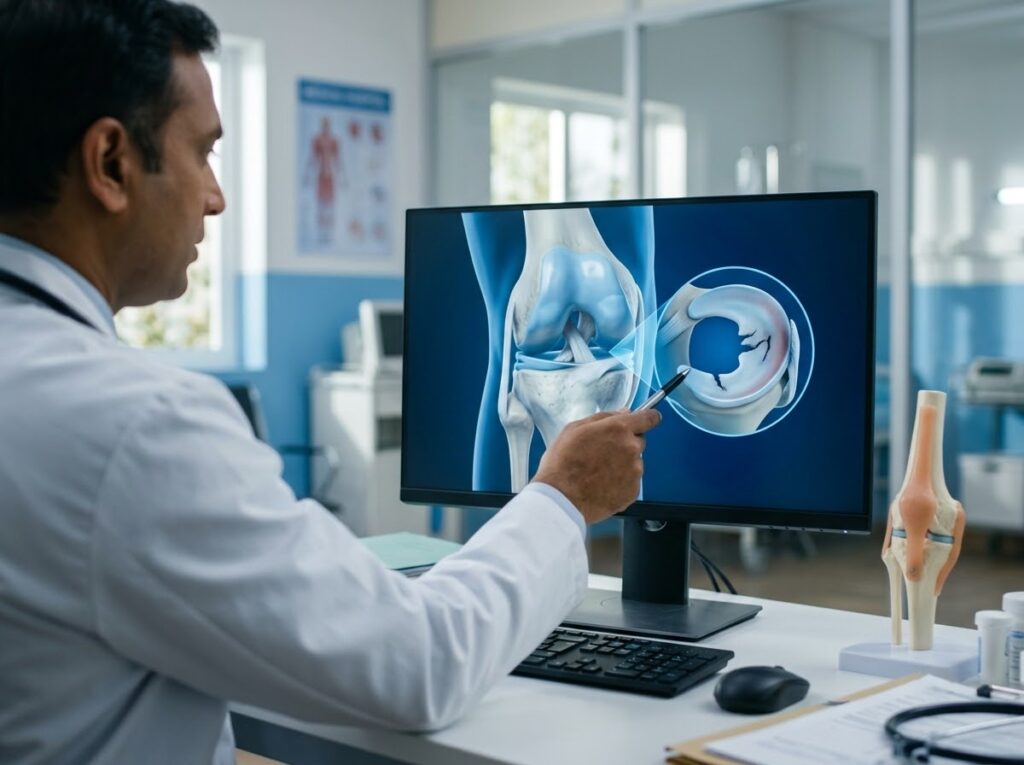
Knee arthroscopy is a keyhole procedure in which a small camera is inserted into the knee joint so the surgeon can see the ligaments, meniscus and cartilage on a screen, and treat problems with fine instruments.
It is commonly used for ACL reconstruction, meniscus repair and selected cartilage problems. Not every knee pain needs arthroscopy — many conditions improve without surgery.
Common Conditions
- ACL and PCL tears
- Meniscus tears
- Multi-ligament knee injuries
- Cartilage damage
- Loose bodies in the joint
- Patellar (kneecap) instability
Symptoms
- Knee pain and swelling after injury
- Knee giving way or instability
- Locking or catching
- Difficulty bending or straightening
- Pain on twisting or squatting
Causes
- Twisting sports injuries
- Sudden stops and landings
- Direct blow to the knee
- Degenerative tears with age
- Road traffic accidents
Risk Factors
- Football, kabaddi, basketball, badminton
- Previous knee injury
- Weak thigh muscles
- Poor landing technique
- Excess body weight
Arthroscopic Procedures
- ACL reconstruction
- Meniscus repair or trimming
- Multi-ligament reconstruction
- Cartilage procedures
- Removal of loose bodies
Diagnosis
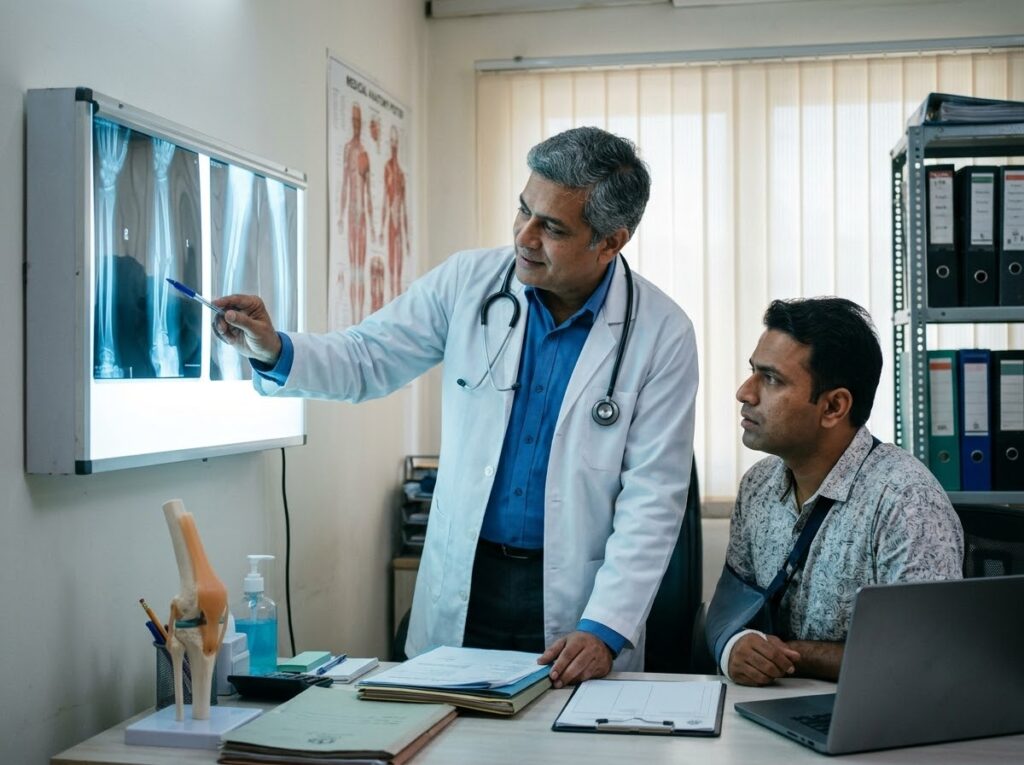
- Detailed history and physical examination
- X-ray of the affected joint
- MRI or CT scan when needed
- Assessment of severity and function
When to Consult a Doctor?
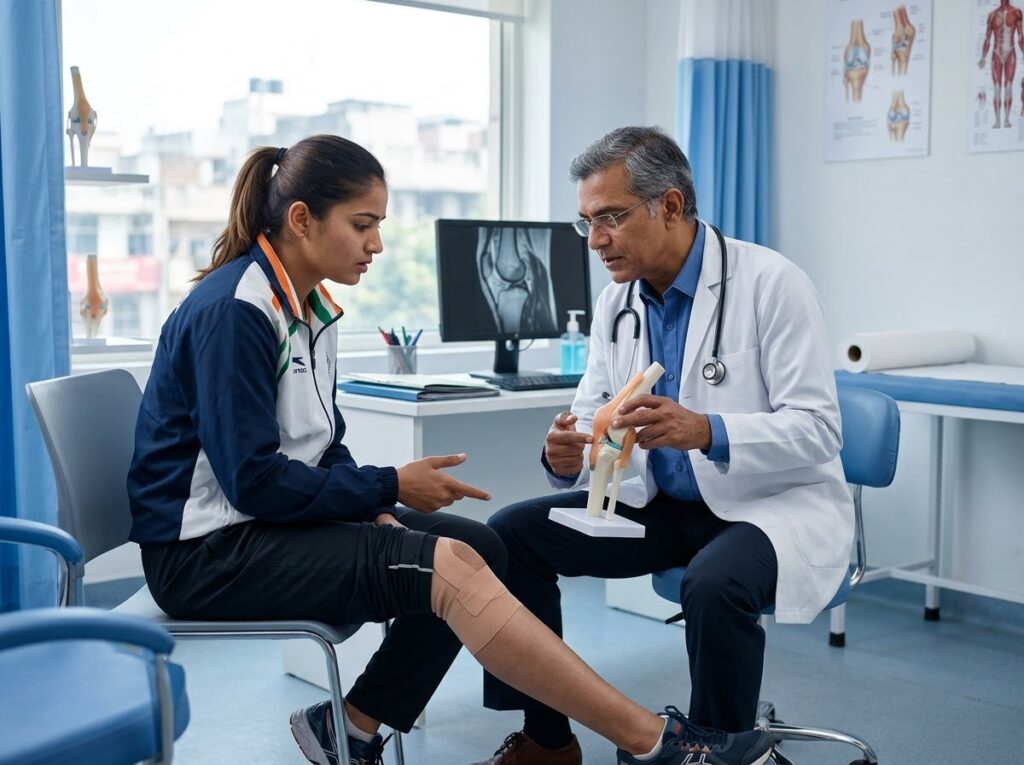
- Swelling soon after an injury
- Knee giving way during activity
- Locking or catching of the knee
- Pain that does not settle with rest
When is Treatment Needed?
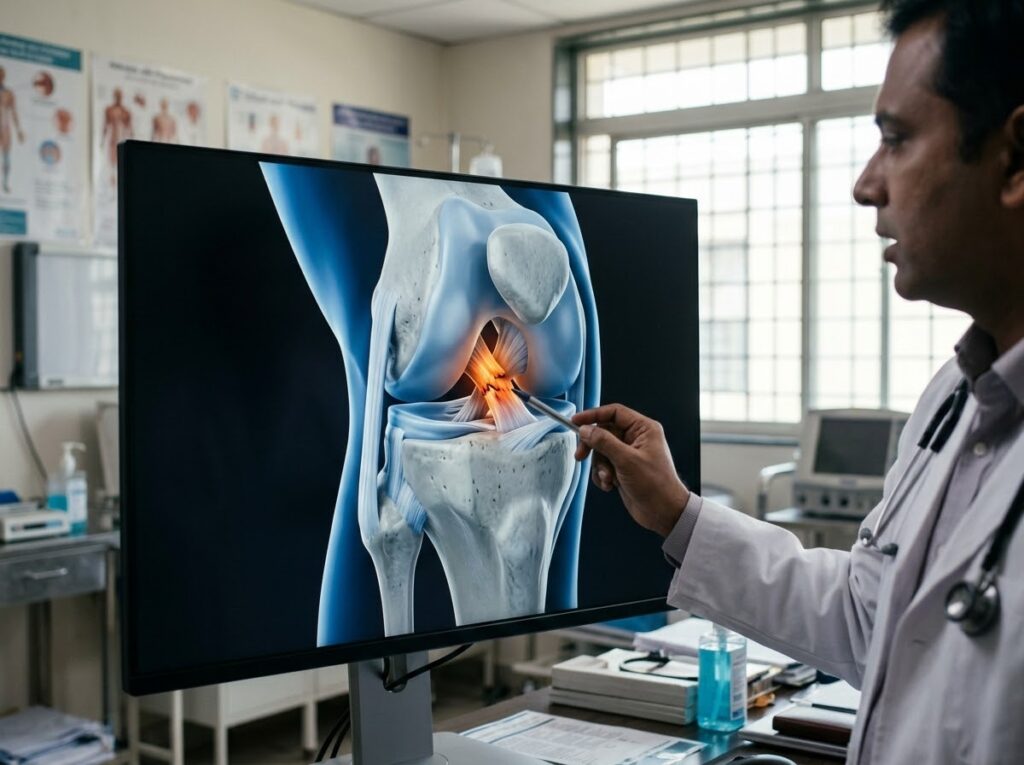
- Unstable knee with ligament tear
- Locked knee from a meniscus tear
- Symptoms affecting sport or work
- Failure of supervised physiotherapy
Seek urgent medical care for a severe injury, deformity, a hot red swollen joint with fever, sudden inability to bear weight or use the limb, or numbness and loss of circulation.
Treatment Options Overview
A complete range of options based on your condition, age, activity level and goals.
Rest & Protection
Activity changes, ice, support
Medication
Pain and inflammation control
Physiotherapy
Strength, mobility and stability
Arthroscopic Surgery
Keyhole repair when needed
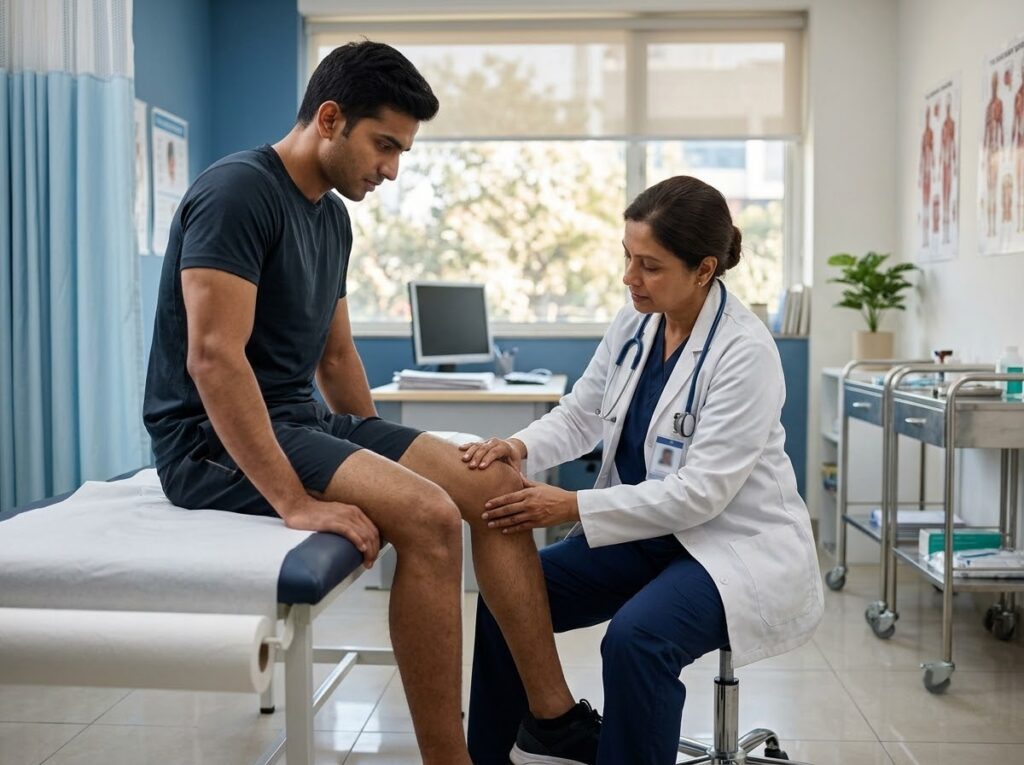
Non-Surgical Treatment
- Rest, ice, compression and elevation
- Bracing and protected movement
- Physiotherapy for strength and balance
- Pain relief medicines
- Activity modification
When is Surgery Recommended?
- Complete ACL tear with instability
- Repairable or locked meniscus tears
- Multi-ligament injuries
- Persistent symptoms despite rehabilitation
Surgical Techniques
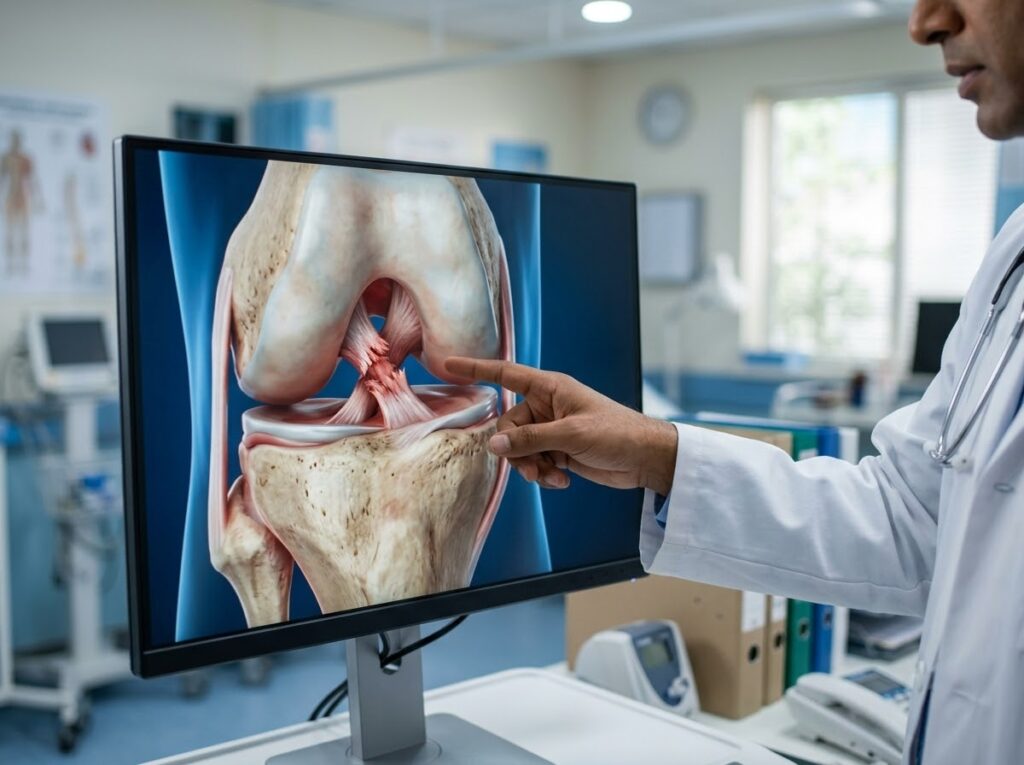
ACL Reconstruction
Meniscus Repair
Ligament Reconstruction
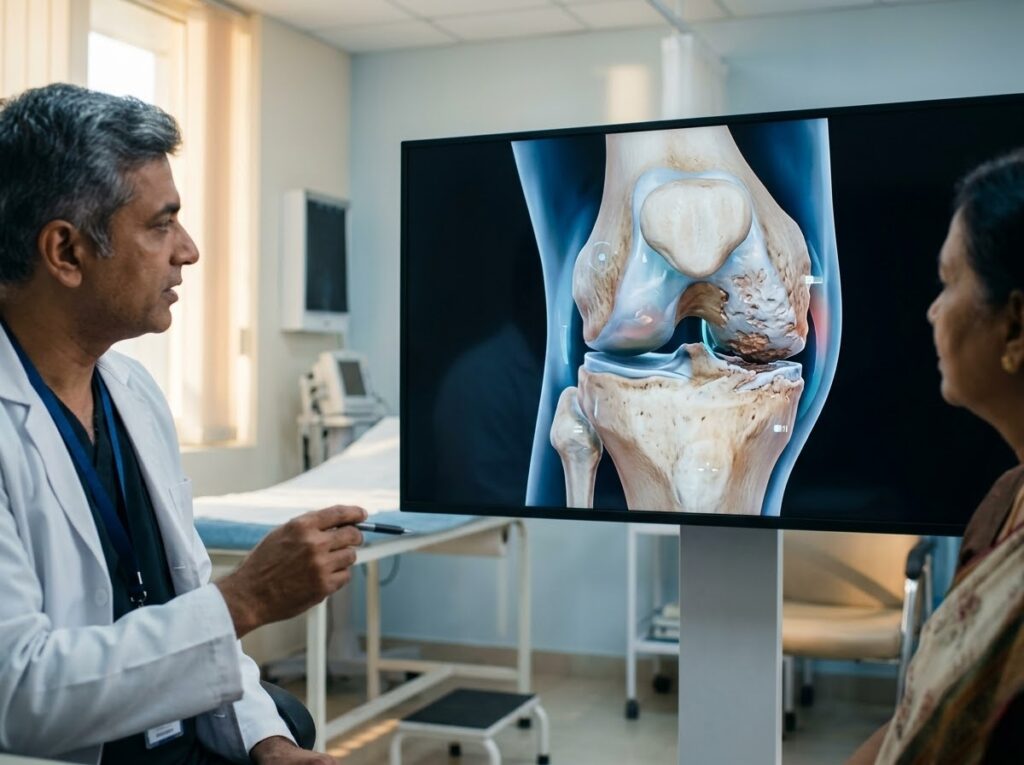
Cartilage Procedures
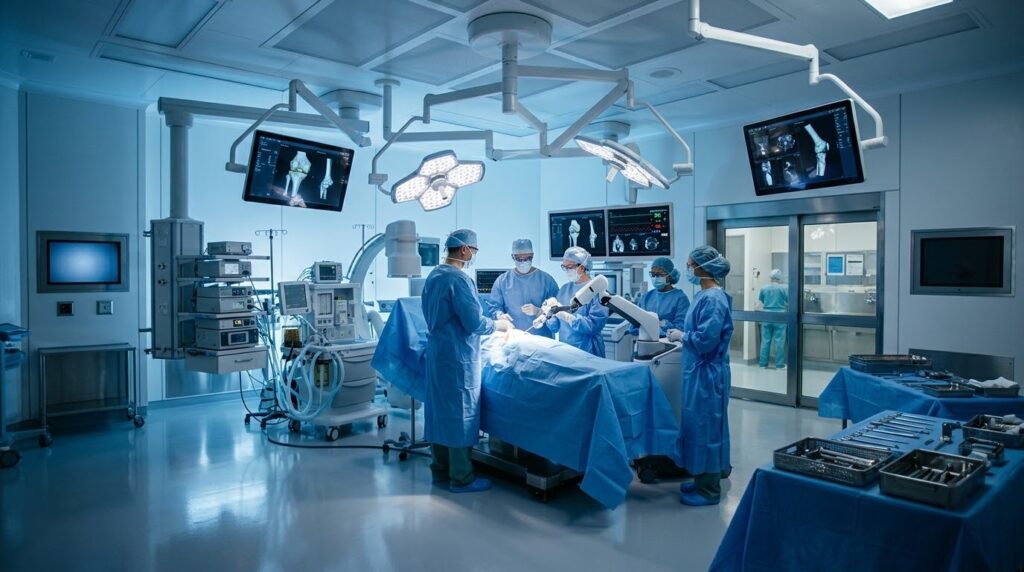
The Procedure
Spinal or general anaesthesia
Arthroscope inserted through a small incision
Ligament, meniscus or cartilage is treated
Incisions closed; knee bandaged or braced
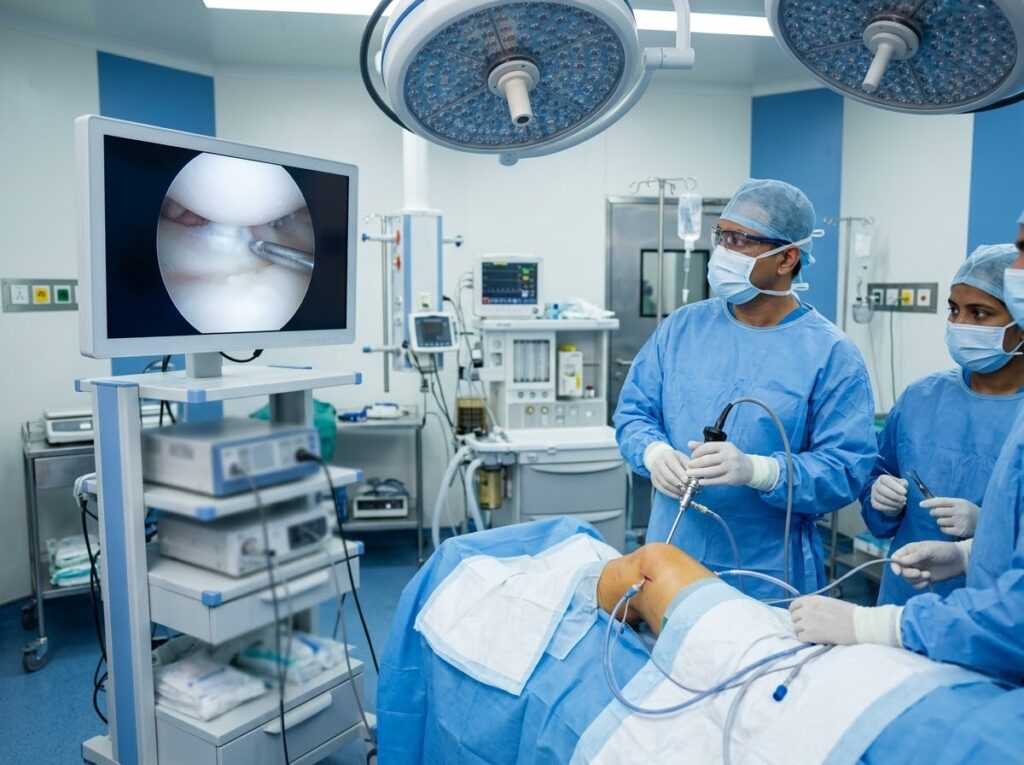
Planning & Technology
- High-definition arthroscopic system
- Graft fixation devices for ligament surgery
- MRI-based planning
- Sports-specific rehabilitation
Potential Benefits
- Smaller incisions and scars
- Less pain after surgery
- Shorter hospital stay
- Restored knee stability
Risks & Limitations
- Knee stiffness or swelling
- Graft failure or re-tear
- Infection or blood clots (uncommon)
- Long rehabilitation for ligament surgery
Preparation
- Medical evaluation and investigations
- Blood tests and imaging
- Medication review
- Home and support planning
- Pre-operative instructions
Recovery is a Process
Progress varies with health, procedure, rehabilitation and individual healing. Your care team will give you a personalised plan.

Hospital Stay
- Often day-care or one night
- Walking with support as advised
- Brace and cold therapy as needed
- Exercise plan before discharge
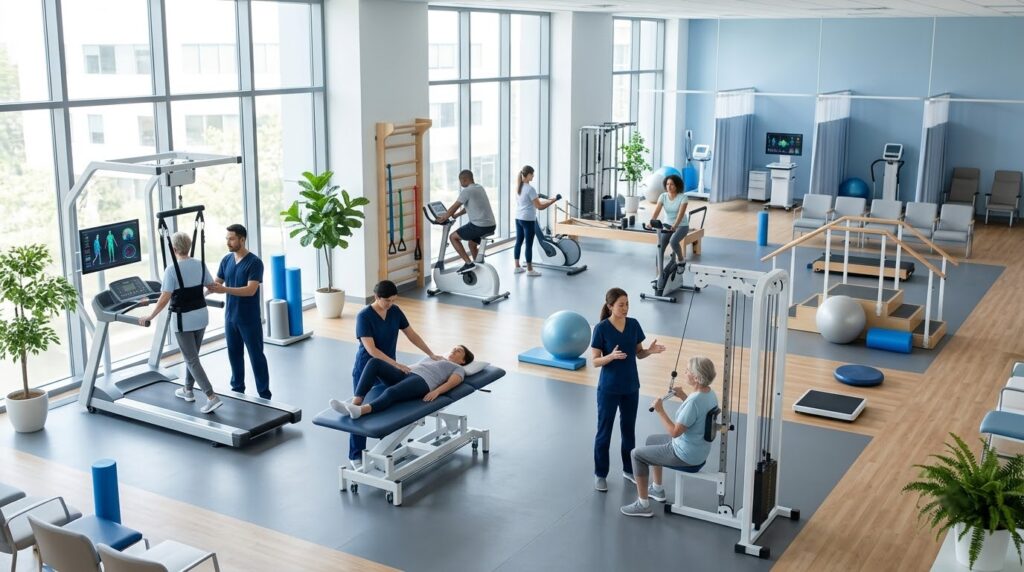
Recovery Timeline
- Walking with support in the early days
- Range-of-motion exercises over weeks
- Strength and balance training follows
- Sport return after ligament surgery takes months
Post-Treatment Care
- Physiotherapy and home exercises
- Regular follow-up visits
- Wound care as advised
- Report concerning symptoms promptly
Return to Work & Activity
- Desk work within days to weeks
- Driving when safe and cleared
- Running only when strength allows
- Sport after functional testing
Cost of Knee Arthroscopy
- Cost depends on the procedure, implant (if any) and hospital
- Room category, investigations and length of stay affect the total
- Surgeon, anaesthesia, medicines and rehabilitation are included in estimates
- Request an itemised estimate before making a decision
Insurance & Cashless Facility
- Coverage depends on your policy, insurer or TPA and hospital network
- Cashless approval is subject to insurer rules and pre-authorisation
- Assistance with required documentation
- Confirm eligibility and out-of-pocket costs with your insurer

Dr. Saumitra Dubey
MBBS, D.Ortho and DNB (Orthopaedics), trained at high-volume centres in India with fellowships in Arthroscopy & Sports Medicine and in Complex Trauma & Revision Surgery. Special interest in shoulder and knee surgery, including reverse shoulder arthroplasty, rotator cuff tears, shoulder instability and multi-ligament knee injuries.
- MBBS | D.Ortho | DNB (Orthopaedics) | FICT | FIASM
- Specialist in Knee & Shoulder
- Arthroscopy, Arthroplasty & Complex Trauma
- Personalised Treatment Plans
10+
Years in Medicine
2
Specialist Fellowships
Best Paper
Award, POSAC 2022
Shalby Hospital
Consultant, Indore
Frequently Asked Questions
Common questions about knee arthroscopy.
Does every knee injury require arthroscopy?
No. Treatment depends on the specific injury, examination, imaging, symptoms and activity goals. Many conditions can be managed without surgery.
How soon can I walk after knee arthroscopy?
Many patients walk with support soon after surgery. After ligament reconstruction or meniscus repair, weight-bearing may be protected for a period.
Can a torn ACL heal on its own?
A completely torn ACL usually does not heal back. Some less active people manage with rehabilitation, while active people often need reconstruction.
When can I return to sports after ACL reconstruction?
Return to sport is usually several months after surgery and depends on strength, stability and functional tests.
Is meniscus repair better than removal?
When the tear is repairable, preserving the meniscus is generally preferred because it protects the cartilage. Your surgeon will decide based on the tear.
Book an Appointment
Take the first step towards a pain-free and active life. Share your details and our team will call you to confirm your visit.
- +91 99267 32322
- Mon - Sat: 4:00 PM - 8:00 PM