- Manorama Ganj, Indore
- +91 99267 32322
- saumitradubey19@gmail.com
- Mon - Sat: 4:00 PM - 8:00 PM

Home / Treatments / Shoulder Arthroscopy
Keyhole Shoulder Surgery for Pain-Free Movement
Shoulder arthroscopy allows the surgeon to look inside the shoulder through small incisions and treat problems such as rotator cuff tears, instability and labral injuries — a special interest of Dr. Saumitra Dubey.
Treatment at a Glance
Minimally Invasive
Small Incisions
Less Post-op Pain
Often Day-care / Short Stay
Structured Rehabilitation
Restored Shoulder Function
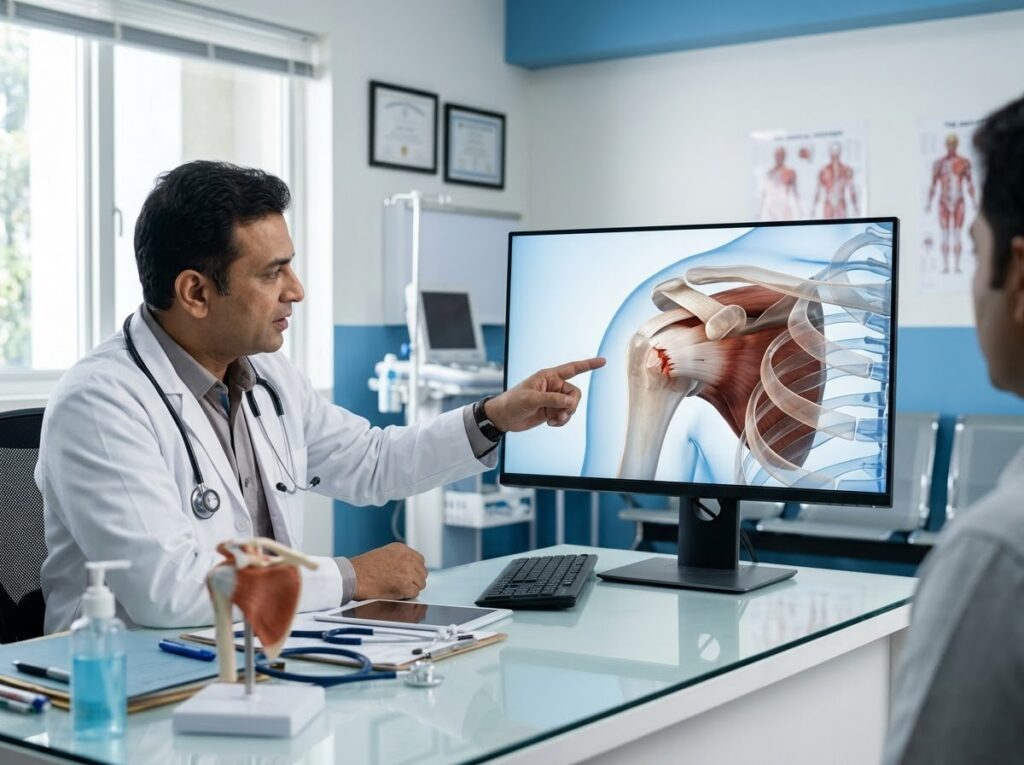
What is Shoulder Arthroscopy?
Shoulder arthroscopy is a minimally invasive (keyhole) procedure. A small camera called an arthroscope is inserted into the shoulder joint, and fine instruments are used through other small incisions to repair or remove damaged tissue.
Compared with open surgery, it usually means smaller scars and less soft-tissue damage. Whether it is right for you depends on your diagnosis, examination and imaging.
Common Conditions
- Rotator cuff tear
- Recurrent shoulder dislocation (instability)
- Labral (SLAP / Bankart) tears
- Frozen shoulder not improving with therapy
- Shoulder impingement
- Biceps tendon problems
Symptoms
- Shoulder pain, especially at night
- Weakness when lifting the arm
- Clicking, catching or locking
- Shoulder slipping or dislocating
- Stiffness and reduced movement
Causes
- Sports or fall injuries
- Repetitive overhead activity
- Age-related tendon wear
- Previous dislocation
- Inflammation of the joint lining
Risk Factors
- Overhead sports and work
- Age over 40 for cuff tears
- Previous shoulder injury
- Diabetes (frozen shoulder)
- Poor posture and muscle imbalance
Arthroscopic Procedures
- Rotator cuff repair
- Bankart / labral repair
- Subacromial decompression
- Capsular release for stiffness
- Biceps tenodesis
Diagnosis
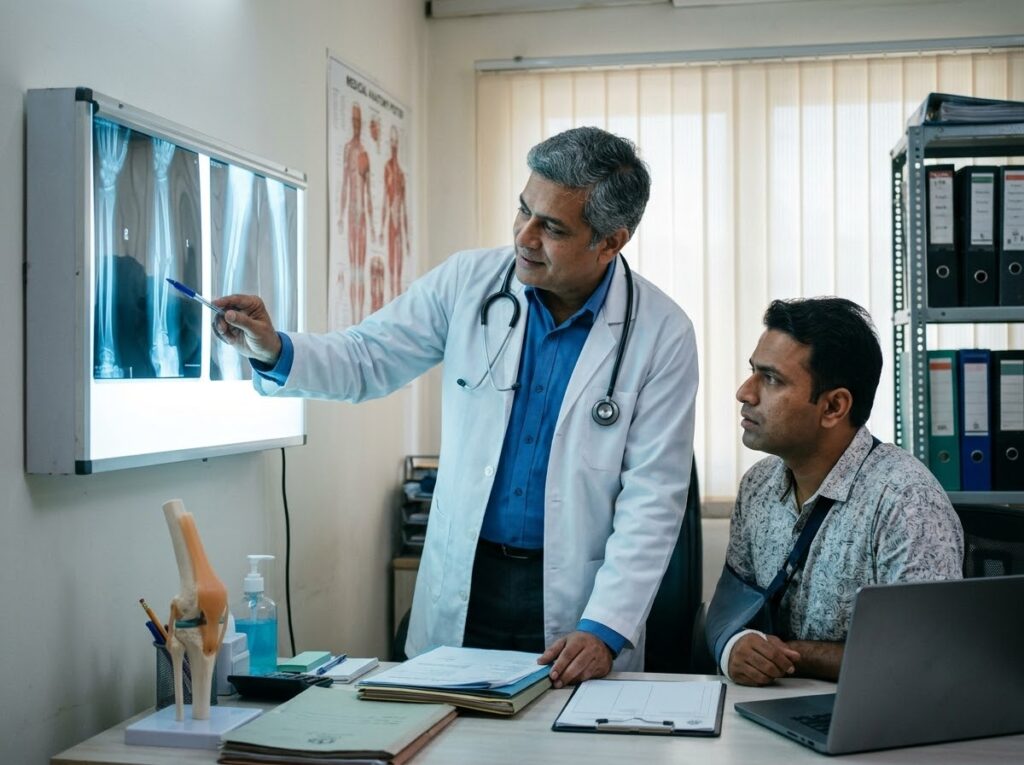
- Detailed history and physical examination
- X-ray of the affected joint
- MRI or CT scan when needed
- Assessment of severity and function
When to Consult a Doctor?
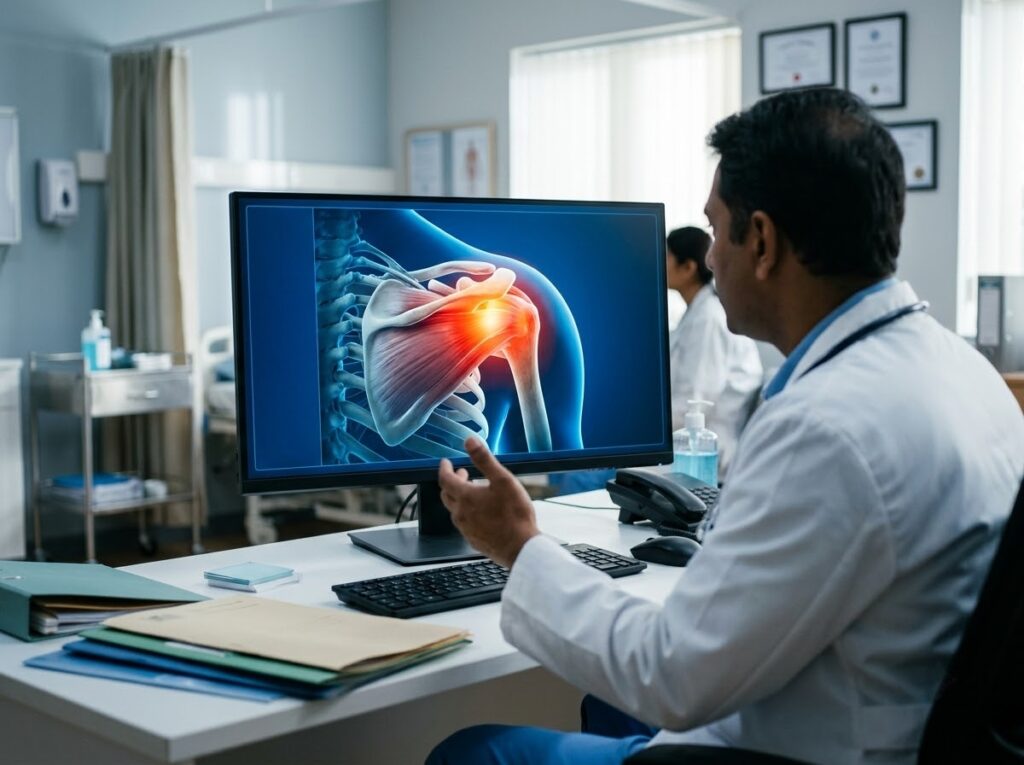
- Shoulder pain lasting more than a few weeks
- Weakness lifting the arm
- Shoulder dislocation or instability
- Pain disturbing sleep
When is Treatment Needed?
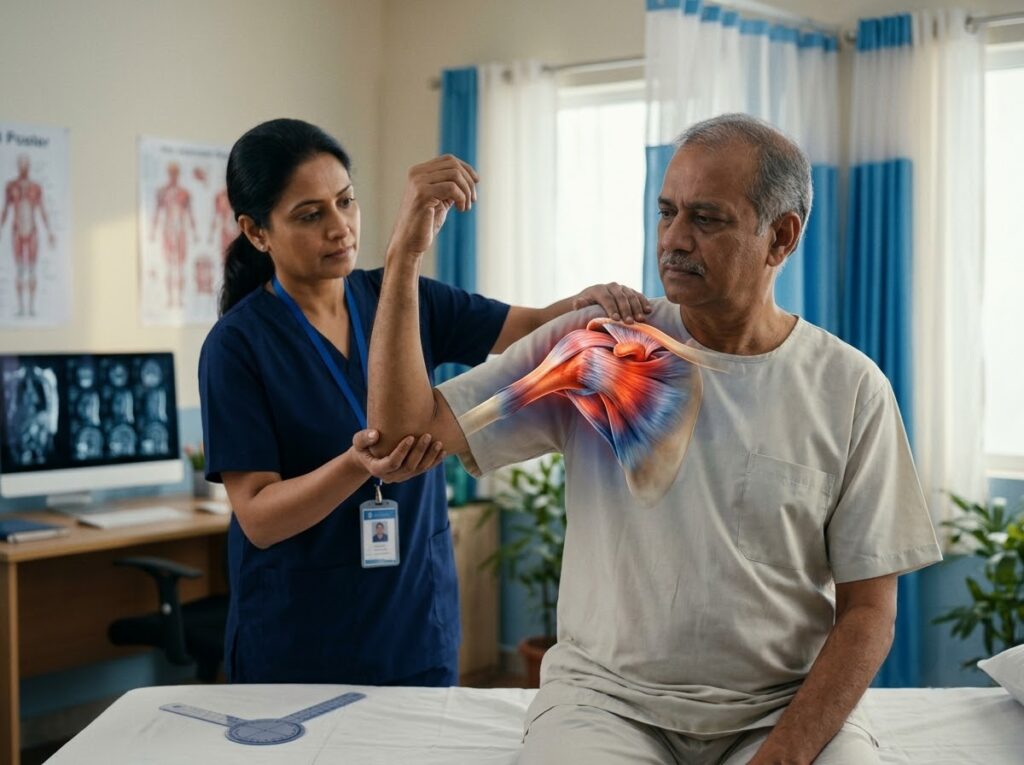
- Symptoms not improving with physiotherapy
- Confirmed tear on MRI
- Repeated dislocations
- Loss of function affecting work or sport
Seek urgent medical care for a severe injury, deformity, a hot red swollen joint with fever, sudden inability to bear weight or use the limb, or numbness and loss of circulation.
Treatment Options Overview
A complete range of options based on your condition, age, activity level and goals.
Rest & Protection
Activity changes, ice, support
Medication
Pain and inflammation control
Physiotherapy
Strength, mobility and stability
Arthroscopic Surgery
Keyhole repair when needed
Non-Surgical Treatment
- Rest and activity modification
- Pain relief medicines
- Physiotherapy to strengthen the rotator cuff
- Injections in selected cases
- Posture and technique correction
When is Surgery Recommended?
- Full-thickness or progressing rotator cuff tears
- Recurrent dislocation or instability
- Mechanical symptoms such as locking
- Persistent pain despite good rehabilitation
Surgical Techniques
Rotator Cuff Repair
Labral / Bankart Repair
Capsular Release
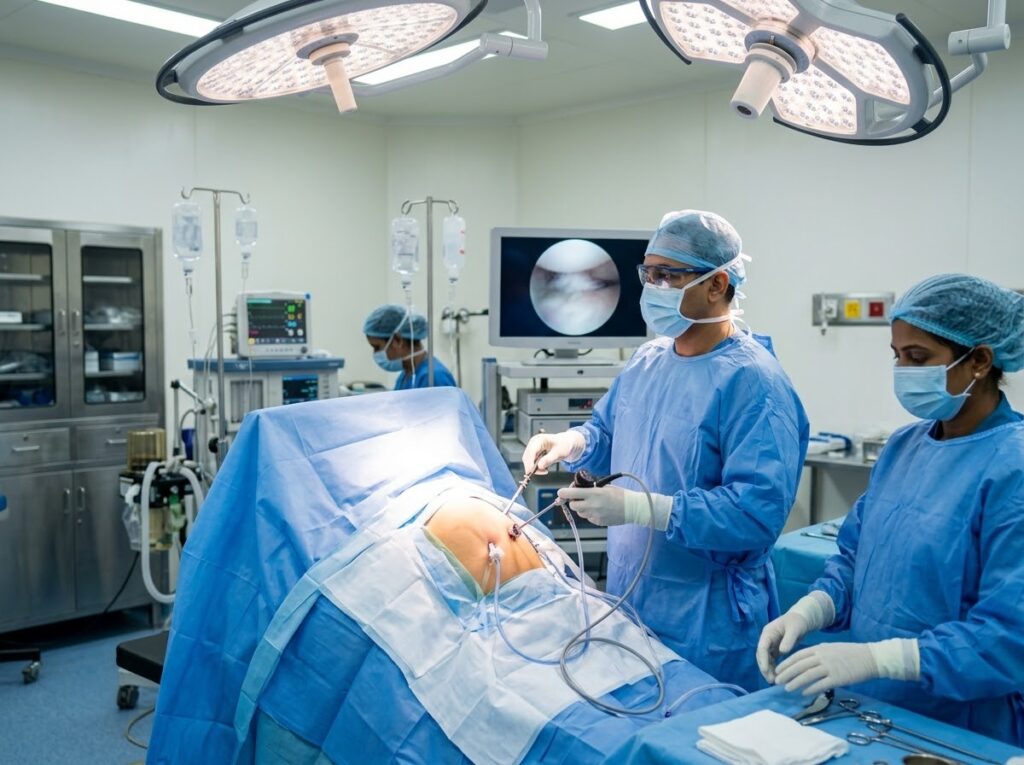
Decompression
The Procedure
Anaesthesia and nerve block for comfort
Arthroscope inserted through a small incision
Damaged tissue is repaired with anchors or sutures
Small incisions closed; arm placed in a sling
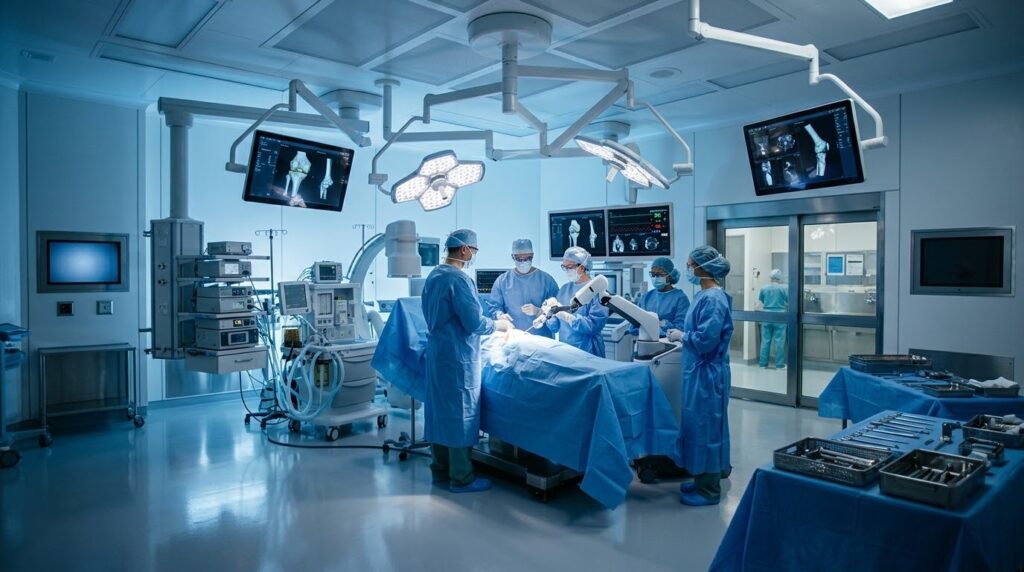
Planning & Technology
- High-definition arthroscopic camera
- Suture anchors for secure repair
- MRI-based surgical planning
- Stage-wise rehabilitation protocol
Potential Benefits
- Smaller scars
- Less soft-tissue damage
- Lower post-operative pain
- Faster early recovery
Risks & Limitations
- Stiffness after surgery
- Re-tear or recurrence in some cases
- Infection (uncommon)
- Nerve or blood vessel injury (rare)
Preparation
- Medical evaluation and investigations
- Blood tests and imaging
- Medication review
- Home and support planning
- Pre-operative instructions
Recovery is a Process
Progress varies with health, procedure, rehabilitation and individual healing. Your care team will give you a personalised plan.

Hospital Stay
- Often same-day or overnight stay
- Arm supported in a sling
- Pain control with nerve block and medicines
- Physiotherapy instructions before discharge
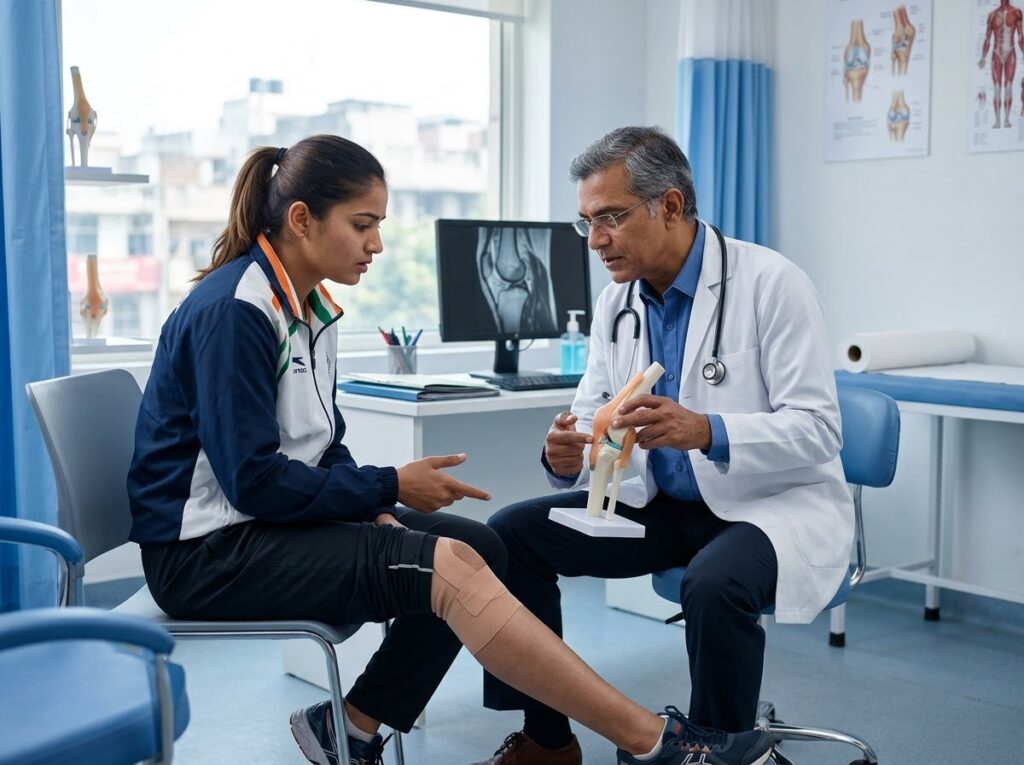
Recovery Timeline
- Sling for a period advised by your surgeon
- Gentle movement exercises early on
- Strengthening after the repair has healed
- Full recovery can take several months
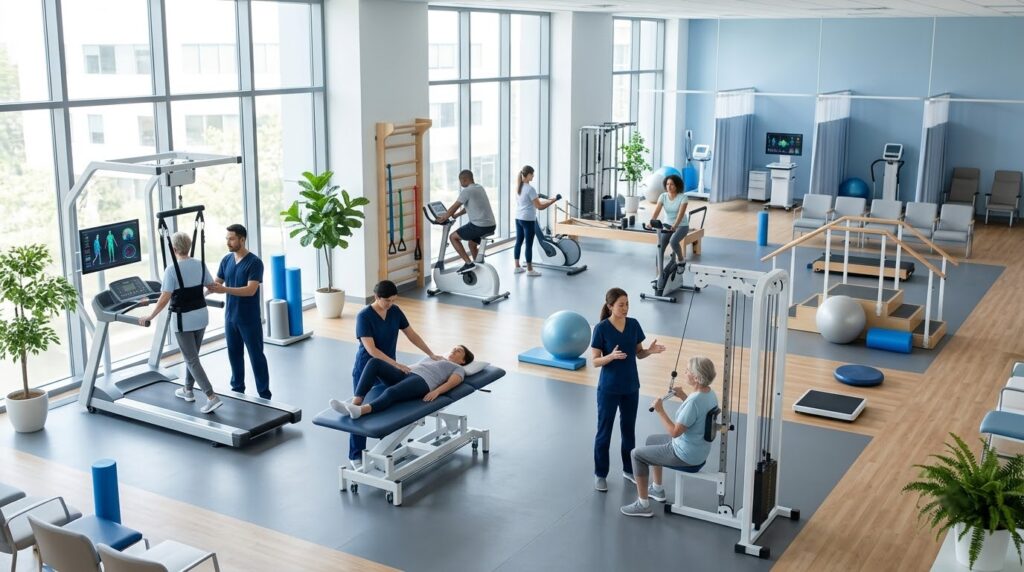
Post-Treatment Care
- Physiotherapy and home exercises
- Regular follow-up visits
- Wound care as advised
- Report concerning symptoms promptly
Return to Work & Activity
- Desk work often within a few weeks
- Driving once off the sling and cleared
- Overhead and lifting work later
- Return to sport after strength is restored
Cost of Shoulder Arthroscopy
- Cost depends on the procedure, implant (if any) and hospital
- Room category, investigations and length of stay affect the total
- Surgeon, anaesthesia, medicines and rehabilitation are included in estimates
- Request an itemised estimate before making a decision
Insurance & Cashless Facility
- Coverage depends on your policy, insurer or TPA and hospital network
- Cashless approval is subject to insurer rules and pre-authorisation
- Assistance with required documentation
- Confirm eligibility and out-of-pocket costs with your insurer

Dr. Saumitra Dubey
MBBS, D.Ortho and DNB (Orthopaedics), trained at high-volume centres in India with fellowships in Arthroscopy & Sports Medicine and in Complex Trauma & Revision Surgery. Special interest in shoulder and knee surgery, including reverse shoulder arthroplasty, rotator cuff tears, shoulder instability and multi-ligament knee injuries.
- MBBS | D.Ortho | DNB (Orthopaedics) | FICT | FIASM
- Specialist in Knee & Shoulder
- Arthroscopy, Arthroplasty & Complex Trauma
- Personalised Treatment Plans
10+
Years in Medicine
2
Specialist Fellowships
Best Paper
Award, POSAC 2022
Shalby Hospital
Consultant, Indore
Frequently Asked Questions
Common questions about shoulder arthroscopy.
Is shoulder arthroscopy a major surgery?
It is a keyhole procedure with small incisions, but it is still surgery performed under anaesthesia. The extent depends on what is repaired.
How long will I wear a sling?
This depends on the procedure. After a rotator cuff or labral repair the sling is usually worn for a few weeks to protect the repair.
Will my shoulder become completely normal?
Most patients see significant improvement in pain and function, but results vary with the condition, tissue quality and rehabilitation.
Can all rotator cuff tears be treated without surgery?
Some tears, especially partial or degenerative ones, can improve with physiotherapy. Larger or traumatic tears may need repair.
When can I return to sports?
Return to sport is gradual and is usually allowed only after strength, range of motion and stability have recovered.
Book an Appointment
Take the first step towards a pain-free and active life. Share your details and our team will call you to confirm your visit.
- +91 99267 32322
- Mon - Sat: 4:00 PM - 8:00 PM