- Manorama Ganj, Indore
- +91 99267 32322
- saumitradubey19@gmail.com
- Mon - Sat: 4:00 PM - 8:00 PM

Home / Conditions We Treat / Rotator Cuff Tear
Rotator Cuff Tear: Regain Shoulder Strength
The rotator cuff is a group of tendons that lift and rotate the arm. Tears cause pain and weakness — and their management is a special interest of Dr. Saumitra Dubey.
What is Rotator Cuff Tear?
The rotator cuff is made of four muscles and their tendons, which keep the ball of the shoulder centred in the socket and allow you to lift and rotate the arm. Tears can follow an injury or develop gradually with age.
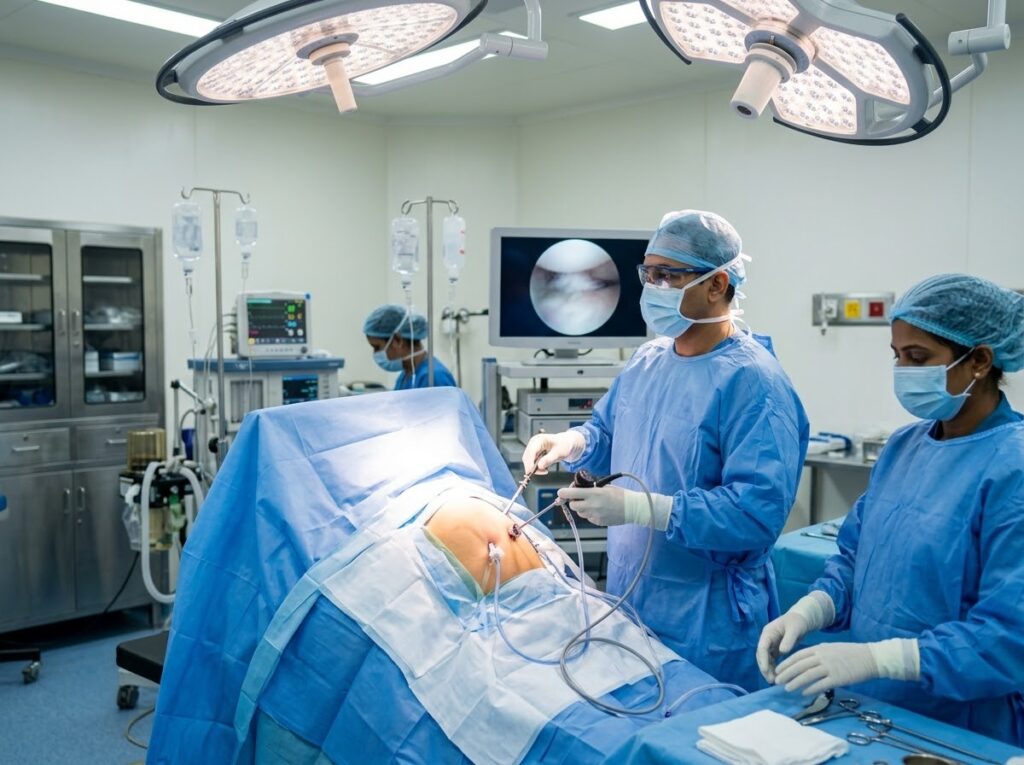
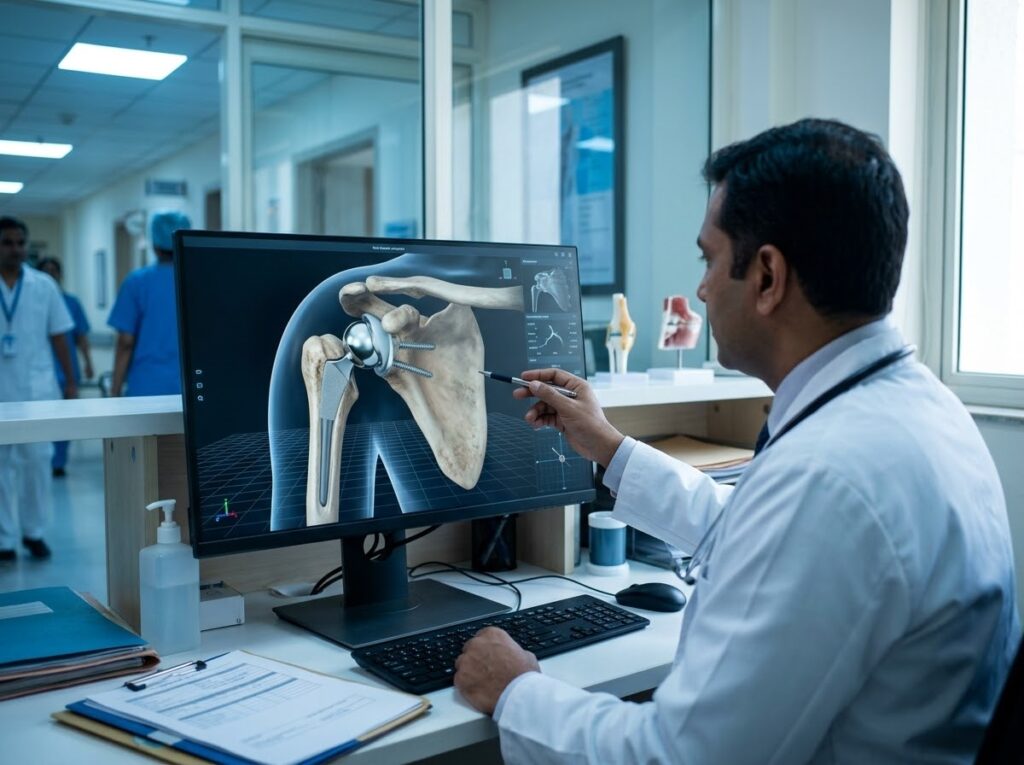
Partial and degenerative tears often improve with physiotherapy, while larger or traumatic tears may need arthroscopic repair. Massive irreparable tears with arthritis may be treated with reverse shoulder replacement.
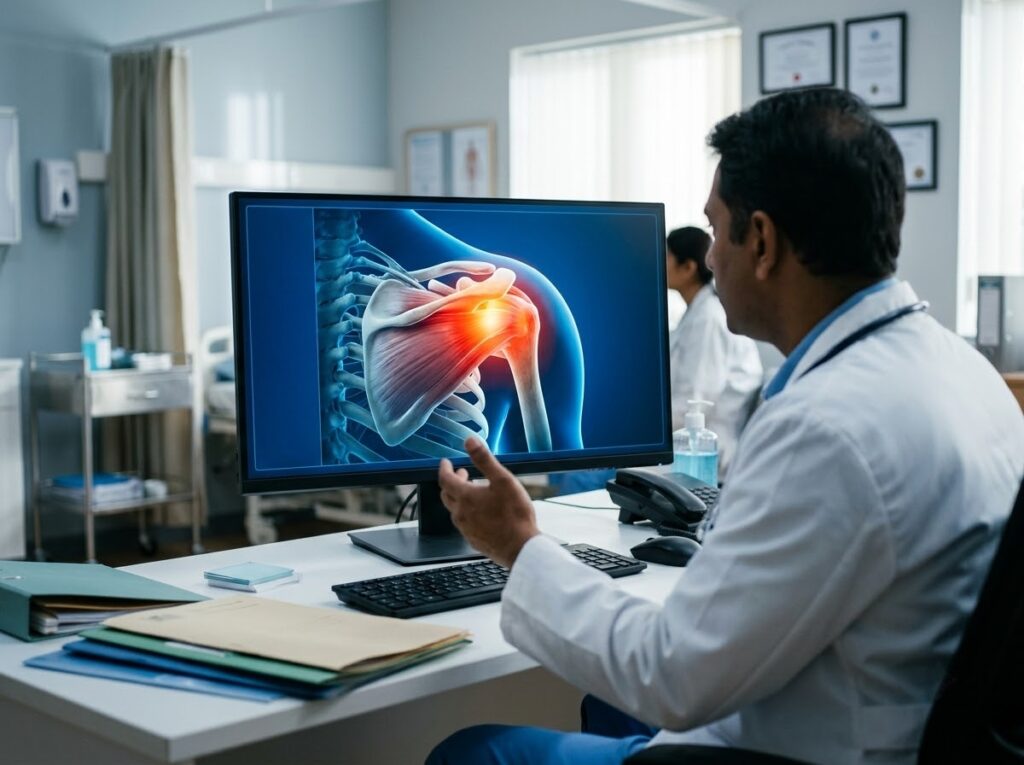
Key Facts
- More common after age 40
- Night pain is typical
- Some tears enlarge over time
- Arthroscopic repair is minimally invasive
Symptoms
- Pain when lifting the arm
- Night pain
- Weakness
- Crackling with movement
- Difficulty reaching behind the back
Causes
- Fall on an outstretched arm
- Lifting heavy objects
- Age-related tendon wear
- Repetitive overhead activity
- Bone spurs (impingement)
Risk Factors
- Age over 40
- Overhead jobs and sports
- Smoking
- Family history
- Previous shoulder injury
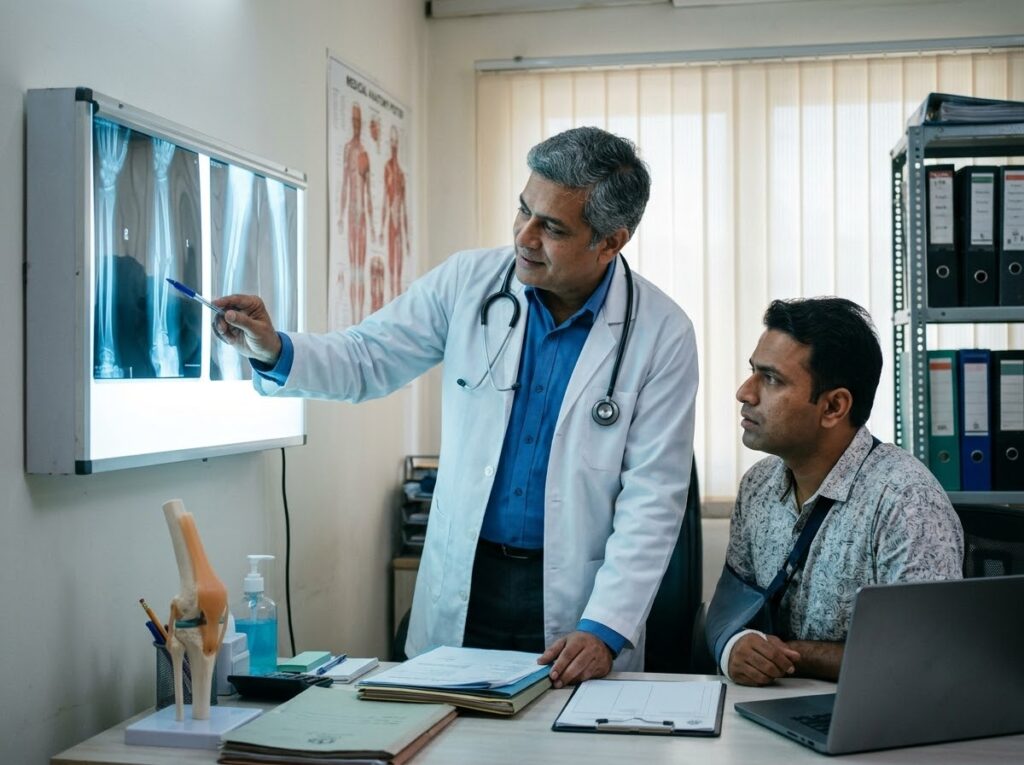
How is it Diagnosed?
- Rotator cuff strength tests
- Subscapularis integrity tests
- Ultrasound or MRI
- X-ray for arthritis or spurs
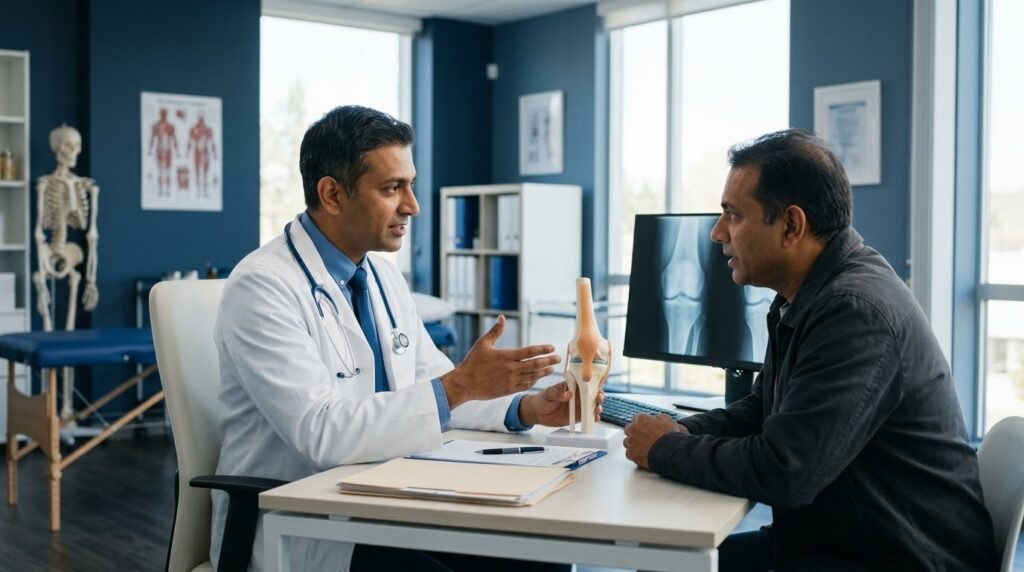
When Should You See a Doctor?
- Weakness after a fall
- Pain affecting sleep
- Pain lasting several weeks
- Unable to lift the arm
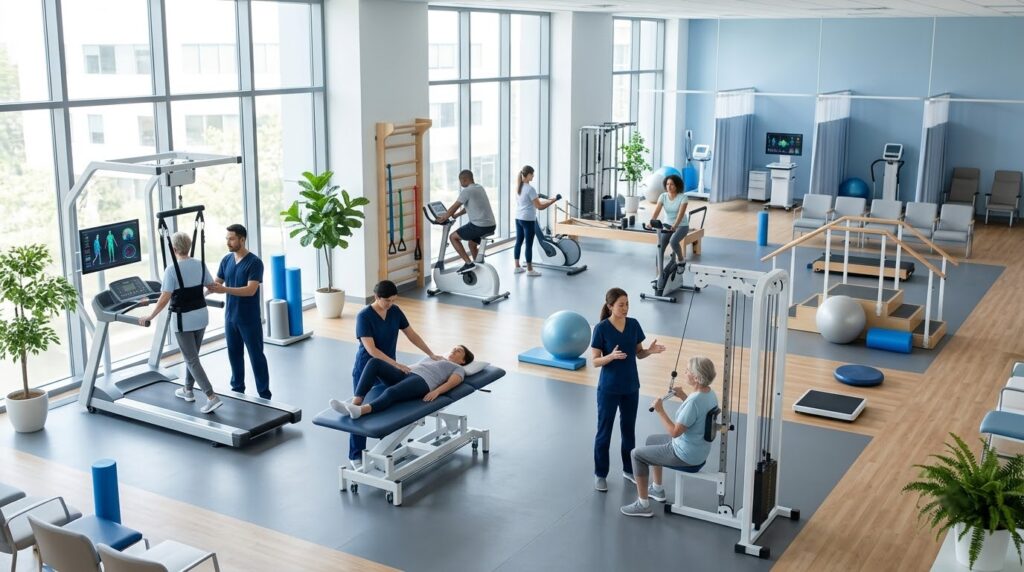
Self-care & Prevention
- Avoid repetitive overhead lifting
- Gentle stretching
- Posture correction
- Follow a guided exercise plan
Treatment Options
Treatment is tailored to your diagnosis, symptoms, activity level and goals.
Non-Surgical Treatment
- Physiotherapy
- Pain relief medicines
- Injections in selected cases
- Activity modification
Surgical Treatment
- Arthroscopic rotator cuff repair
- Biceps procedures if needed
- Reverse shoulder arthroplasty for cuff arthropathy
- Structured rehabilitation
Related Treatments
- Rotator Cuff Tear
- Shoulder Instability
- Labral Repair
- Frozen Shoulder
- Total Shoulder Replacement
- Reverse Shoulder Arthroplasty
- Advanced Shoulder Arthritis
- Rotator Cuff Arthropathy
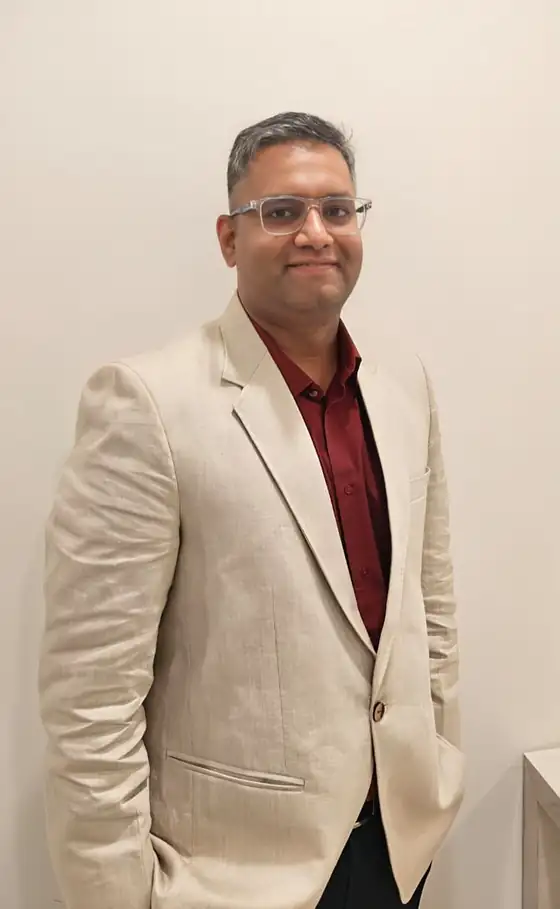
Dr. Saumitra Dubey
MBBS, D.Ortho and DNB (Orthopaedics), trained at high-volume centres in India with fellowships in Arthroscopy & Sports Medicine and in Complex Trauma & Revision Surgery. Special interest in shoulder and knee surgery, including reverse shoulder arthroplasty, rotator cuff tears, shoulder instability and multi-ligament knee injuries.
- MBBS | D.Ortho | DNB (Orthopaedics) | FICT | FIASM
- Specialist in Knee & Shoulder
- Arthroscopy, Arthroplasty & Complex Trauma
- Personalised Treatment Plans
10+
Years in Medicine
2
Specialist Fellowships
Best Paper
Award, POSAC 2022
Shalby Hospital
Consultant, Indore
Frequently Asked Questions
Common questions about rotator cuff tear.
Do all rotator cuff tears need surgery?
No. Many partial and degenerative tears improve with physiotherapy. Larger or traumatic tears in active people may benefit from repair.
What happens if a tear is not treated?
Some tears get larger over time, which can make repair more difficult. Regular review helps decide timing.
How long is recovery after rotator cuff repair?
A sling is usually worn for a few weeks, followed by staged physiotherapy. Full recovery can take several months.
Book an Appointment
Take the first step towards a pain-free and active life. Share your details and our team will call you to confirm your visit.
- +91 99267 32322
- Mon - Sat: 4:00 PM - 8:00 PM