- Manorama Ganj, Indore
- +91 99267 32322
- saumitradubey19@gmail.com
- Mon - Sat: 4:00 PM - 8:00 PM

Home / Conditions We Treat / Frozen Shoulder
Frozen Shoulder: Relieve Pain, Restore Movement
Frozen shoulder (adhesive capsulitis) causes painful stiffness of the shoulder. With the right treatment, most people regain good movement.
What is Frozen Shoulder?
In frozen shoulder, the capsule around the shoulder joint becomes thickened and tight, causing pain and a marked loss of movement. It typically passes through freezing (painful), frozen (stiff) and thawing (recovery) phases.
It is more common in people with diabetes or thyroid disease. Most cases improve with physiotherapy and pain management; resistant cases may need arthroscopic release.

Key Facts
- Common between ages 40 and 60
- More frequent in diabetes
- Recovery can take months
- Physiotherapy is the mainstay
Symptoms
- Gradual onset shoulder pain
- Severe stiffness in all directions
- Night pain
- Difficulty dressing or combing hair
- Pain reaching overhead or behind
Causes
- Inflammation and thickening of the capsule
- Often no clear cause
- After shoulder injury or surgery
- After a period of immobilisation
- Associated medical conditions
Risk Factors
- Diabetes
- Thyroid disorders
- Age 40–60
- Female sex
- Prolonged immobility

How is it Diagnosed?
- Clinical examination of movement
- X-ray to rule out arthritis
- Blood sugar and thyroid tests
- MRI or ultrasound if needed

When Should You See a Doctor?
- Shoulder pain with stiffness
- Pain disturbing sleep
- Difficulty with daily tasks
- No improvement after weeks

Self-care & Prevention
- Daily gentle stretching
- Heat before exercises
- Good blood sugar control
- Avoid complete rest of the arm
Treatment Options
Treatment is tailored to your diagnosis, symptoms, activity level and goals.
Non-Surgical Treatment
- Physiotherapy and stretching
- Pain relief medicines
- Steroid injection in selected cases
- Hydrodilatation in selected cases
Surgical Treatment
- Manipulation under anaesthesia (selected)
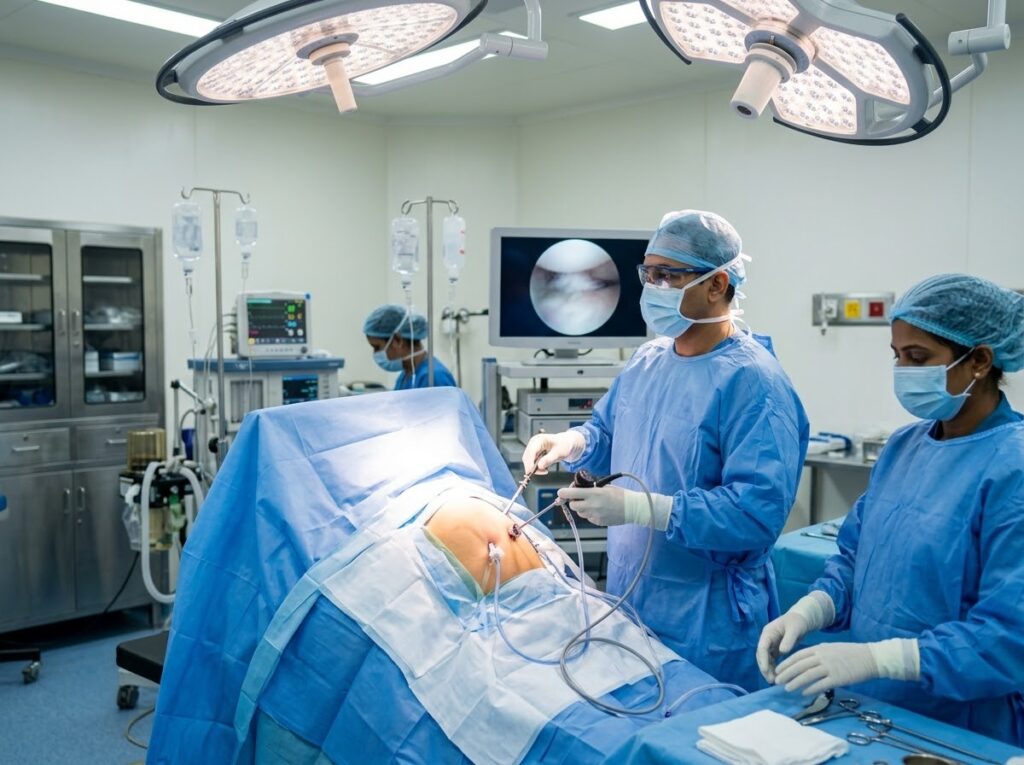
- Arthroscopic capsular release
- Early post-operative physiotherapy
- For cases not responding to treatment
Related Treatments
- Rotator Cuff Tear
- Shoulder Instability
- Labral Repair
- Frozen Shoulder

Dr. Saumitra Dubey
MBBS, D.Ortho and DNB (Orthopaedics), trained at high-volume centres in India with fellowships in Arthroscopy & Sports Medicine and in Complex Trauma & Revision Surgery. Special interest in shoulder and knee surgery, including reverse shoulder arthroplasty, rotator cuff tears, shoulder instability and multi-ligament knee injuries.
- MBBS | D.Ortho | DNB (Orthopaedics) | FICT | FIASM
- Specialist in Knee & Shoulder
- Arthroscopy, Arthroplasty & Complex Trauma
- Personalised Treatment Plans
10+
Years in Medicine
2
Specialist Fellowships
Best Paper
Award, POSAC 2022
Shalby Hospital
Consultant, Indore
Frequently Asked Questions
Common questions about frozen shoulder.
Will frozen shoulder go away on its own?
Many cases improve over time, but recovery can take months. Treatment helps control pain and speed up recovery of movement.
Is surgery needed for frozen shoulder?
Rarely. Surgery such as arthroscopic release is considered when stiffness persists despite good non-surgical treatment.
Why is frozen shoulder more common in diabetes?
Diabetes is associated with changes in connective tissue that make the capsule more prone to thickening.
Book an Appointment
Take the first step towards a pain-free and active life. Share your details and our team will call you to confirm your visit.
- +91 99267 32322
- Mon - Sat: 4:00 PM - 8:00 PM